Guest Lecture by Dr. Bartłomiej Gajos, Research Fellow at the Institute of History of the Polish Academy of Sciences
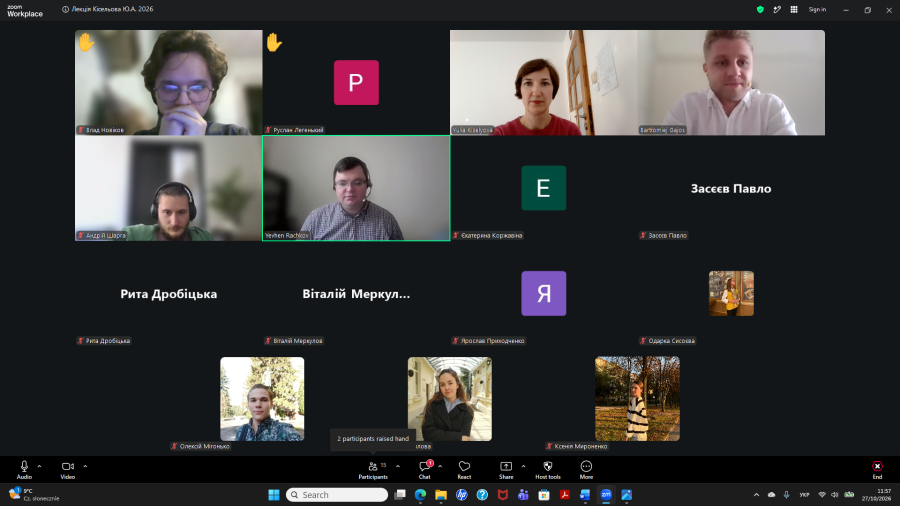
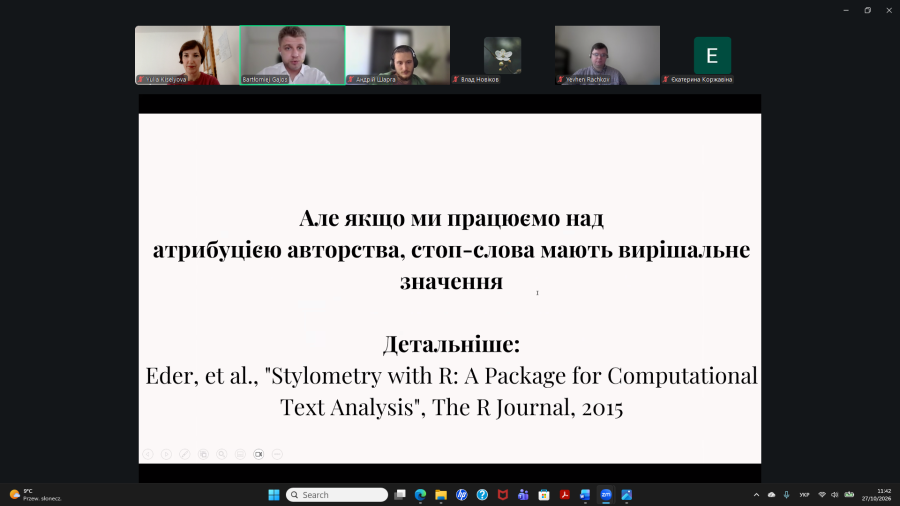
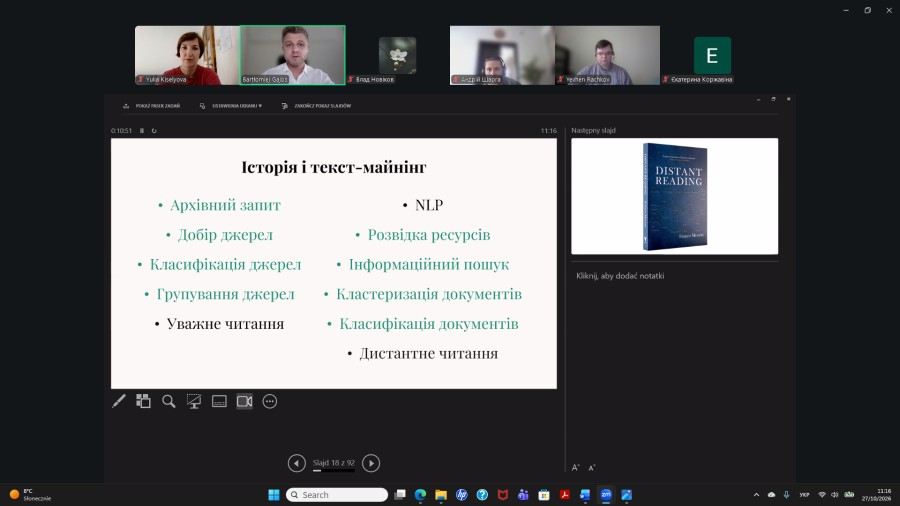
On October 27, 2026, as part of the course Methodology of Historical Research, a guest lecture was delivered by Dr. Bartłomiej Gajos, a Polish historian, research fellow at the Institute of History of the Polish Academy of Sciences, and specialist in Russian politics of history. The lecture, titled “From the Archive to Python: How Data Analysis Is Changing the Historian’s Craft,” explored the growing role of digital methods in historical scholarship.
Drawing on his own research on publications from the official Kremlin website (kremlin.ru), Dr. Gajos demonstrated how text-mining techniques can be applied to the analysis of large bodies of textual sources. He discussed both the opportunities these methods create for historians and the methodological procedures required for their effective use.
Particular attention was devoted to the differences between digital approaches, especially the method of “distant reading,” and more traditional practices of historical research. Dr. Gajos explained in detail how source materials must be prepared for automated analysis, the stages involved in working with large textual datasets, and the key issues researchers should consider when interpreting quantitative results.
Especially valuable for students were his recommendations on scholarly literature and software resources for those interested in incorporating digital methods into their own research projects.
Importantly, the lecture focused not only on the possibilities offered by digital history but also on its limitations. Dr. Gajos encouraged participants to critically assess the prospects of the digital transformation of historical scholarship. One of the central arguments of the lecture was that quantitative methods do not replace traditional historical analysis; rather, they help scholars identify new perspectives, formulate new research questions, and define promising directions for future inquiry. The lecture concluded with a lively discussion.
We would like to express our sincere gratitude to Dr. Bartłomiej Gajos for an engaging, thought-provoking, and highly practical lecture. We are especially appreciative that he delivered the presentation in Ukrainian, making even complex methodological issues accessible and understandable for students.