Lecture on Urbicide and Cultural Memory During the Russian-Ukrainian War
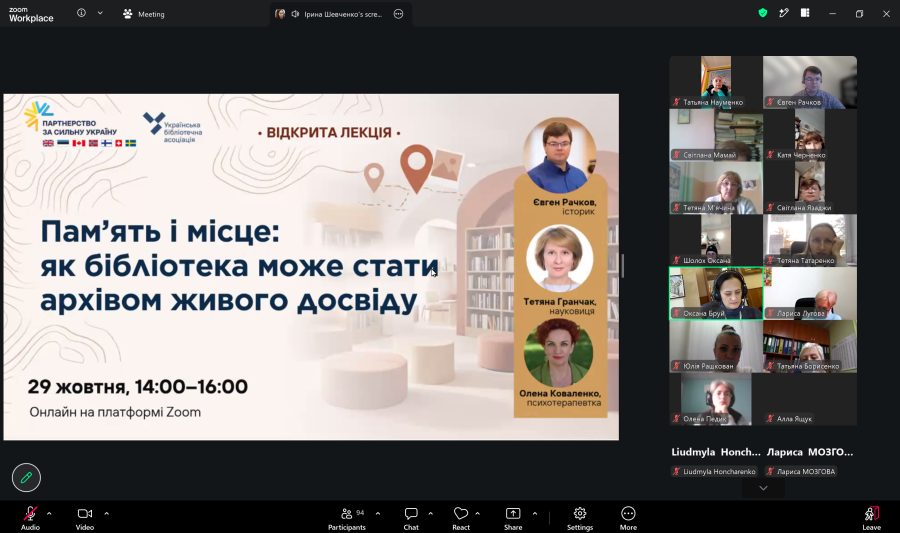
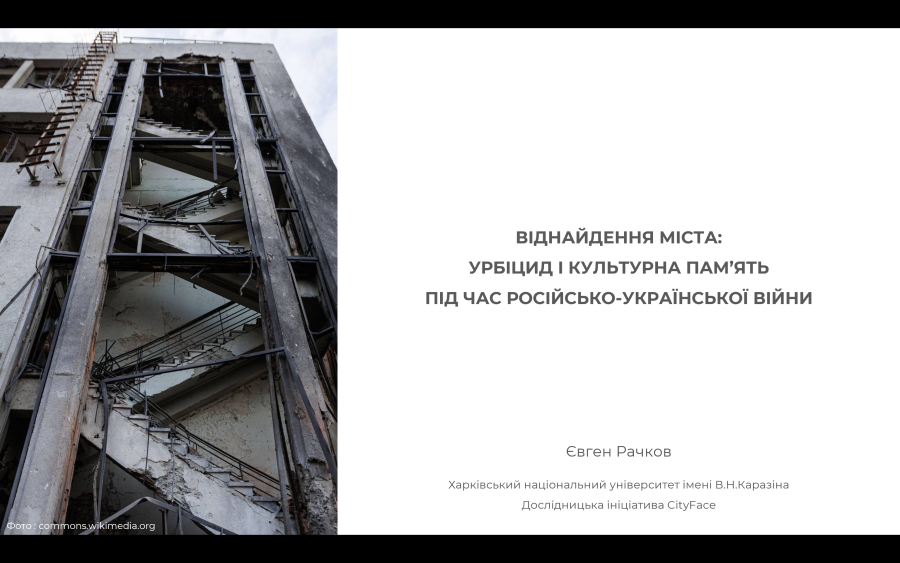
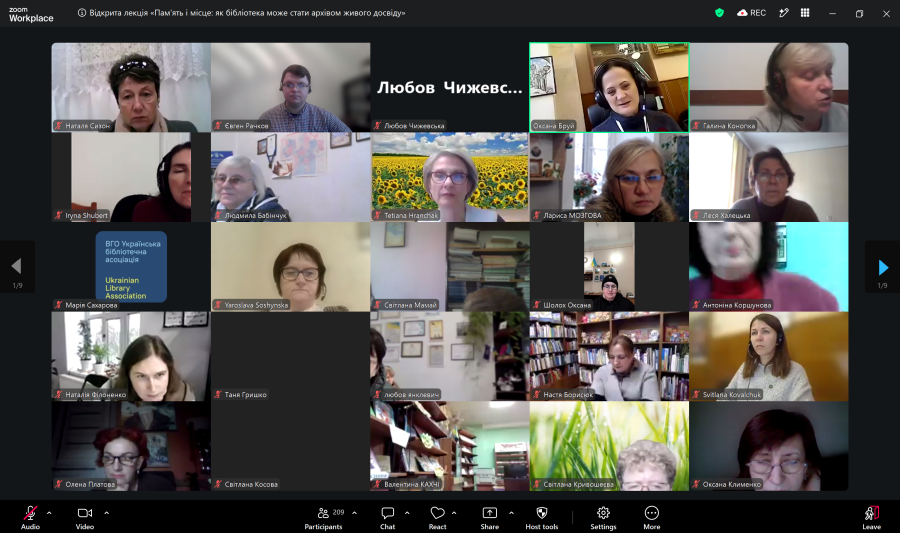
On October 29, 2026, as part of the project “Mapping Memory: Libraries as Spaces for Trauma-Informed Commemoration,” Yevhen Rachkov, Associate Professor in the Department of Historiography, Heritage Studies, and Archaeology, delivered a lecture entitled “Reclaiming the City: Urbicide and Cultural Memory during the Russo-Ukrainian War.” The event was organized by the Ukrainian Library Association.
The lecture examined urbicide as the deliberate destruction of urban space in the context of the Russo-Ukrainian War. It emphasized that the consequences of such actions extend beyond the destruction of buildings and infrastructure to affect cultural memory, collective remembrance, and the local identities of communities. At the same time, even when its physical environment has been destroyed, a city does not disappear. Rather, it continues to exist through the memories of those who remain connected to it. Urban communities play a crucial role in preserving and reconstructing cultural memory, maintaining connections with the past while shaping visions of their cities’ futures. Particular attention was devoted to practices of war documentation, including the importance of recording oral testimonies and personal recollections, documenting the destruction of the urban environment, and accounting for losses to cultural heritage. The lecture also explored the role of digital projects in preserving the memory of the war and laying the groundwork for the postwar recovery of communities.
The event brought together librarians, scholars, educators, and others interested in documenting the war and examining its impact on Ukrainian society.
The project “Mapping Memory: Libraries as Spaces for Trauma-Informed Commemoration” is being implemented with the support of the Partnership Fund for a Resilient Ukraine (PFRU), funded by the governments of the United Kingdom, Estonia, Canada, Norway, Finland, Switzerland, and Sweden.